



Dr Harpreet Singh, a quiet force in Melbourne academia, bridging science, sustainability, and community impact.
There is a quiet certainty in the way Dr Harpreet Singh Kandra speaks — the kind that does not seek attention yet commands it.
Long before sustainability became a global headline, it was already shaping his worldview. In the early 1990s, while environmental engineering sat on the margins of mainstream ambition, he chose it with conviction. Cities were beginning to strain under pollution, water quality was deteriorating, and the signs were there for those willing to look closely. Few did. He did.
Today, as a Senior Lecturer at Federation University and a widely respected voice across engineering and community spheres, Dr Harpreet Singh Kandra occupies a rare space — where technical expertise meets lived responsibility. Yet, his perspective remains grounded in a simple observation: the world’s environmental crisis is not only about scarcity, but about disregard.
“Water feels free,” he reflects. “And when something feels free, we stop valuing it.”
It is a deceptively simple truth, but one that underpins some of the most pressing challenges of our time. Across cities, vast volumes of treated water are lost before they reach homes. Meanwhile, the rapid expansion of bottled water industries signals a deeper contradiction — we are paying for what we have failed to protect.
For Dr Harpreet Singh Kandra, the solution is not only technological. It is behavioural.
In Melbourne, a city often celebrated for its progressive outlook, he sees potential in something far more immediate than policy reform — everyday choices. Rethinking how we travel, consume, and share resources may seem incremental, yet collectively, they shape the environmental trajectory of a city.
These shifts, he notes, do more than reduce carbon footprints. They also bring people closer, fostering connection in ways modern life often overlooks.
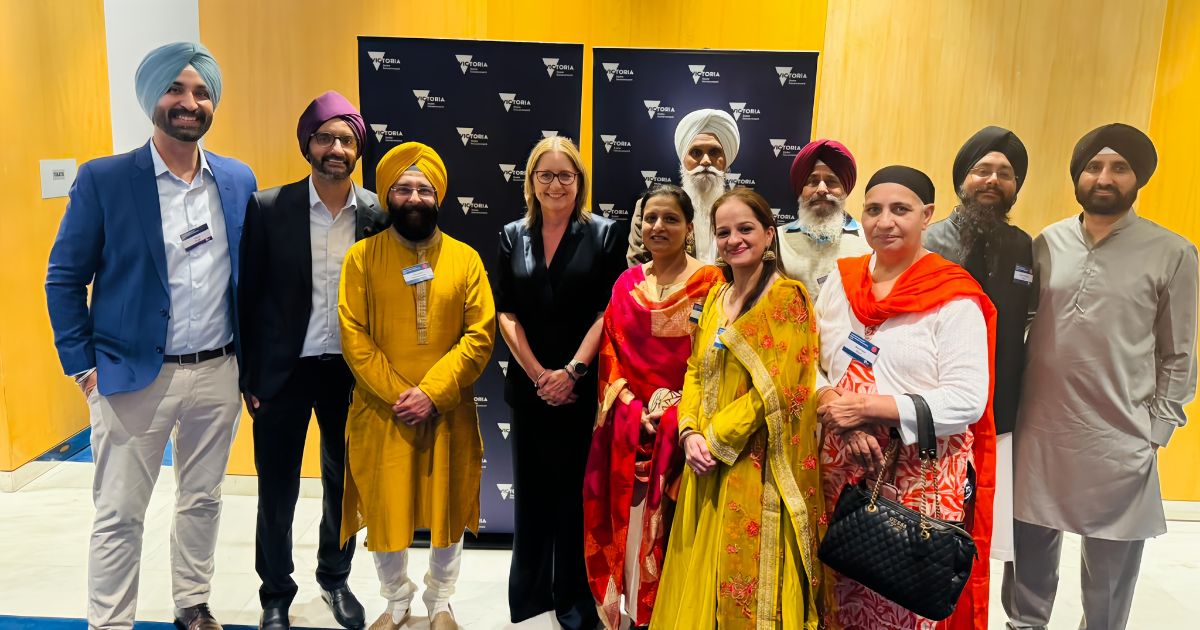
It is this human lens that defines his work. Beyond academia, his impact is most visible within the community — particularly through his work with the Officer Gurdwara in Victoria. Here, sustainability is not an abstract concept, but a lived practice.
A rise in food wastage became an opportunity to rethink systems. Small adjustments in serving, awareness, and coordination led to a measurable reduction in waste. More importantly, it created a shared sense of accountability.
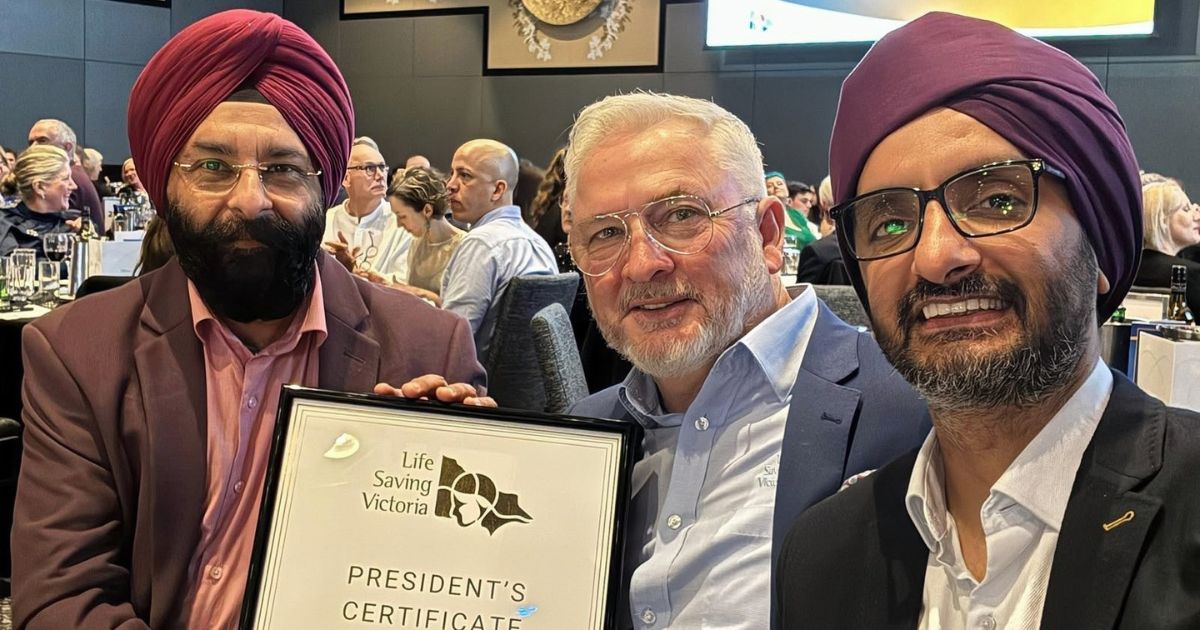
Elsewhere, recognising the vulnerability of multicultural communities to water-related incidents, he has helped shape initiatives focused on water safety and swimming education. The outcomes are tangible — lives protected, confidence built, communities strengthened.
At the centre of his thinking lies a principle both practical and profound: waste is not waste.
“Waste is simply a resource in the wrong place.”
It is a perspective that reframes environmental challenges into opportunities for innovation. Whether through wastewater reuse or emerging energy solutions, his work continues to explore how overlooked systems can be reimagined into sources of value.
And yet, despite decades of experience, his definition of success remains remarkably unembellished. It is not measured in titles or milestones, but in alignment — with people, with purpose, and with values.
Reflecting on his journey to Australia in 2007, he describes it not as a strategic move, but as something more instinctive. Drawn initially by the country’s leadership in water management, he found a sense of belonging that extended far beyond professional pursuits.
“I liked Australia, and Australia liked me,” he says, simply.
It is a sentiment that mirrors his broader philosophy — that the most meaningful outcomes are often those that evolve organically.
Influenced by family, mentors, and faith, his journey is less about individual achievement and more about collective contribution. When asked about legacy, he gently resists the idea of ownership.
“It is not mine alone,” he says. “It is the work we do together.”
In a world increasingly defined by speed and visibility, Dr Harpreet Singh Kandra offers a quieter, more enduring narrative — one that values substance over spectacle, and impact over recognition.
A reminder that real change rarely announces itself; it simply continues, steadily, with purpose.
Tonee Sethi
