


MELBOURNE: In a powerful celebration of heritage, artistry, and enduring cultural exchange, Monash University has launched a landmark exhibition titled “The Place of Indian Music & Dance in Australia”—a compelling journey that honours over a century of Indian-Australian artistic dialogue.
A Grand Opening Night
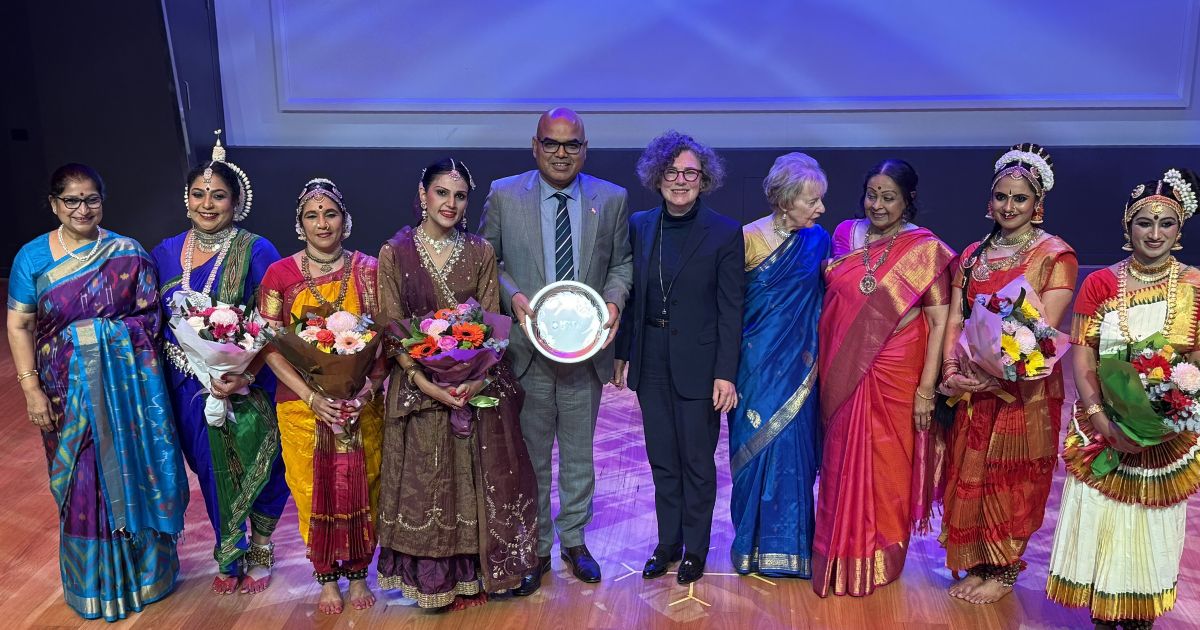
The exhibition opened with warmth and reverence, beginning with a welcome address by Professor Margaret S. Barrett, Head of the Sir Zelman Cowen School of Music and Performance. The evening was graced by Dr. Sushil Kumar, Consul General of India, who highlighted the significance of Indian arts in Australia’s multicultural identity. Insightful remarks from Professor Robyn Bartel, Deputy Dean (Education), Faculty of Arts, and Professor Emerita Margaret Kartomi AM contextualised the exhibition within Monash’s academic legacy.
OAM Tara Rajkumar, a pioneering figure in intercultural performance, reflected on the exhibition’s uniqueness and thanked the contributing artists whose dedication made the showcase possible.
Then came the performance of the night—"Divya Rasa – Divine Essence", a mesmerising dance performance that embodied the soul of Indian classical tradition. The performance opened with a hymn to the Guru and featured powerful segments in Bharatanatyam, Mohiniyattam, Kuchipudi, Odissi, and Kathak. As the dancers reunited in the final crescendo, the audience witnessed an explosive celebration of unity in diversity. Artistic direction by OAM Tara Rajkumar and movement expertise by:
• Ushanthini Sripathmanathan (Bharatanatyam)
• Sanchita Abrol (Kathak)
• Therma Katticaran (Odissi)
• Shyama Sasidharan (Kuchipudi)
• Anjali Nambar (Mohiniyattam)
Four Movements Across Time and Culture
At the heart of this immersive exhibition are four defining movements that trace the roots, evolution, and blossoming of Indian music and dance in Australia:
1st Movement: Instruments of Legacy
This section features an exquisite collection of rare Indian musical instruments originally gifted by Raja Sir Sourindro Mohun Tagore to the Melbourne International Exhibition of 1880–81. Representing diverse traditions from across India, these instruments—on permanent loan from the National Gallery of Victoria—now find a fitting home at Monash.
2nd Movement: Louise Lightfoot—A Trailblazer in Two Worlds
A tribute to the trailblazing Louise Mary Lightfoot (1902–1979), this chapter explores her transformation from a ballet enthusiast to a passionate ambassador of Indian classical dance. Her travels, collaborations—especially with Ananda Shivaram—and academic legacy at Monash are brought to life through rare archival material.
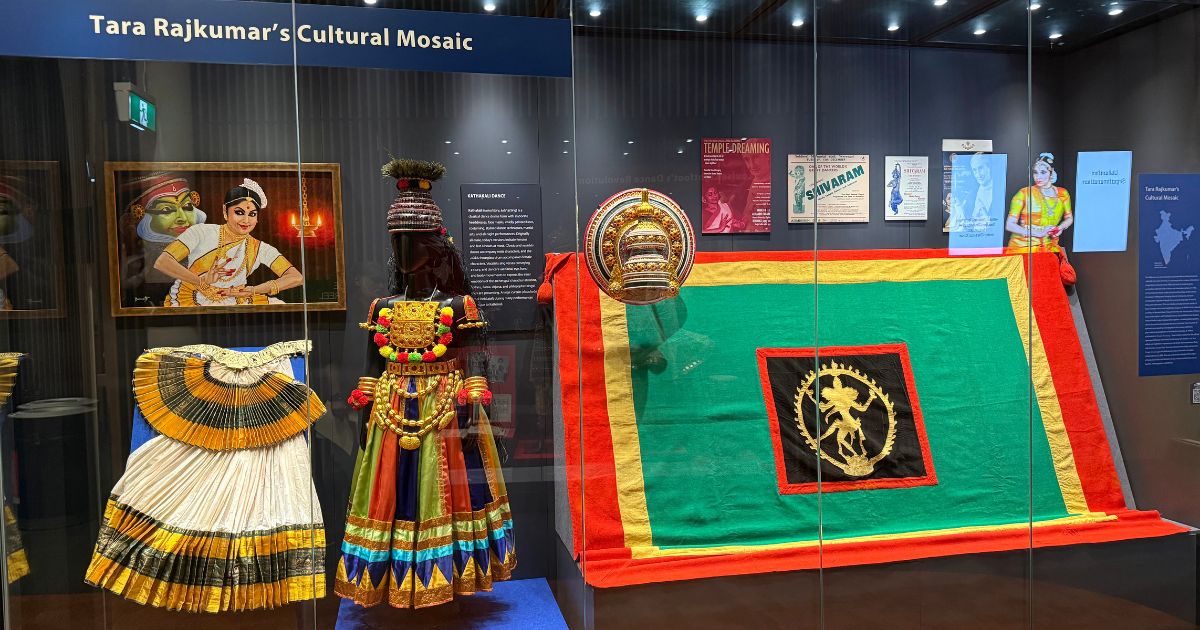
3rd Movement: Tara Rajkumar—A Visionary Bridge Between Cultures
This vibrant segment spotlights the extraordinary journey of Tara Rajkumar OAM and her artistic bridge between India and Australia since the 1970s. From founding the Natya Sudha Dance Company to her critically acclaimed work Temple Dreaming, Rajkumar’s career is documented through evocative film, costume, and memorabilia.
Without Tara’s lifelong dedication and artistic leadership, this exhibition simply would not have been possible. Her contribution has not only connected Indian and Australian cultures but laid the very foundation upon which this remarkable showcase stands.
4th Movement: Pioneers of a Flourishing Legacy
Indian classical dances continue to flourish in Australia, with vibrant platforms for Kathak, Bharatanatyam, Kuchipudi and Odissi—thanks to the enduring efforts of senior Melbourne-based artists. This section honours their contributions too.
• Ushanthini Sripathmanathan – a cornerstone of Bharatanatyam in Melbourne and Artistic Director of Natyalayaa, shaping the local dance landscape through decades of performance and mentorship.
• Sanchita Abrol – a renowned Kathak artist and storyteller, and the first Indian classical dancer in Australia to be a qualified Creative Arts Therapist. She is the founder and director of Sanchita Abrol Dance Creations and Kathaprana, South Asian Centre for Creative Arts Therapies, where she merges classical arts with wellbeing practices.
• Shyama Sasidharan – a passionate Kuchipudi artist, a yoga educator and founder of Prakalpa Samskruti and M4TV, whose work continues to connect diverse communities through art and media.
• Therma Katticaran – an acclaimed Odissi choreographer and educator, leading the Tanishka – Temple of Indian Classical Dances, and expanding the various Indian art forms presence across Victoria.
Their artefacts—costumes, jewellery, photographs, and ankle bells—offer a glimpse into lives devoted to art and cultural exchange.
A Must-See Cultural Experience
This is more than an exhibition—it’s a living chronicle of artistic exchange and mutual respect. Open for the next three years, The Place of Indian Music & Dance in Australia invites everyone to witness the harmonies that emerge when cultures meet in rhythm.
For guided exhibition tours, contact:
Professor Margaret Kartomi: [email protected]
Bronia Kornhauser M.A.: [email protected]
