

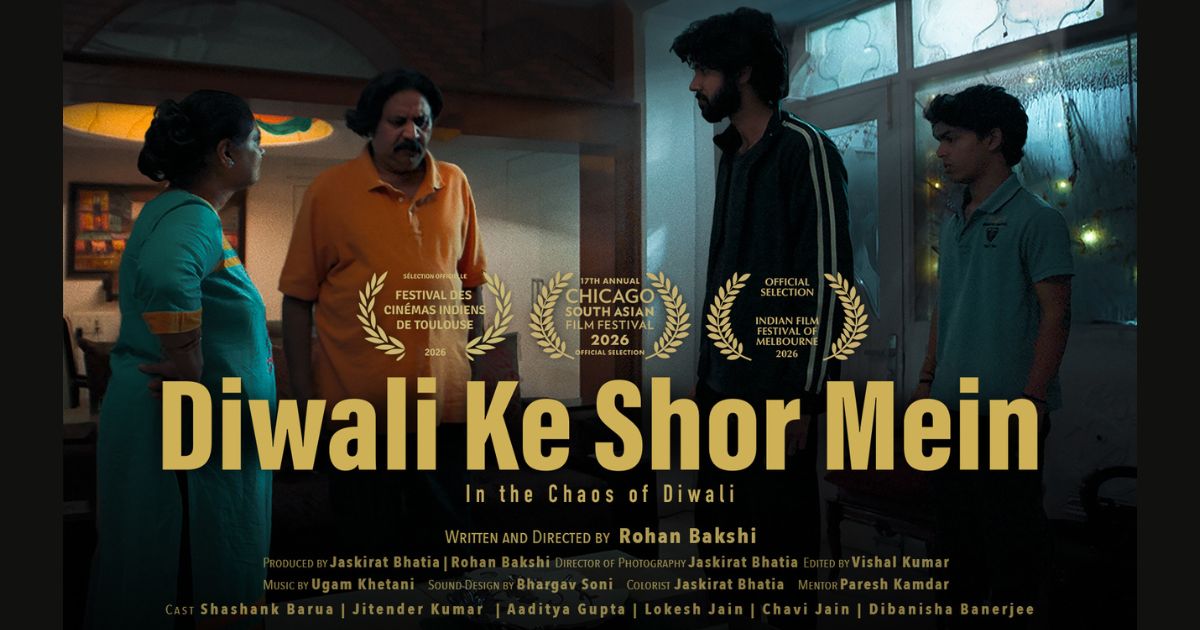
Rohan Bakshi and Jaskirat Singh Bhatia illuminate the secrets and struggles of a Delhi family in their striking debut feature, Diwali Ke Shor Mein.
Speaking with G’day India following the film’s Australian premiere at the Indian Film Festival of Melbourne (IFFM2026), producer and DOP Jaskirat Singh revealed that the story began as three separate narratives connected by a common theme.
“As I continued writing, they gradually became one story told from three different perspectives,” Writer Rohan Bakshi said. The chaos of the narrative, including its unsettling exploration of gun culture, reminded him of the Diwali celebrations he had witnessed growing up in Delhi. Setting the entire story across one festival day gave the film both its structure and restless energy.
For Bakshi, Delhi is more than a backdrop. Its neighbourhoods, social tensions and complicated family relationships give the film its distinct identity. “It is difficult for me to imagine this story taking place anywhere else,” he said.
The film also marks an important creative milestone for producer, cinematographer and colourist Jaskirat Singh Bhatia. He and Bakshi met while studying at Whistling Woods International in Mumbai, where they discovered that their creative instincts complemented one another.
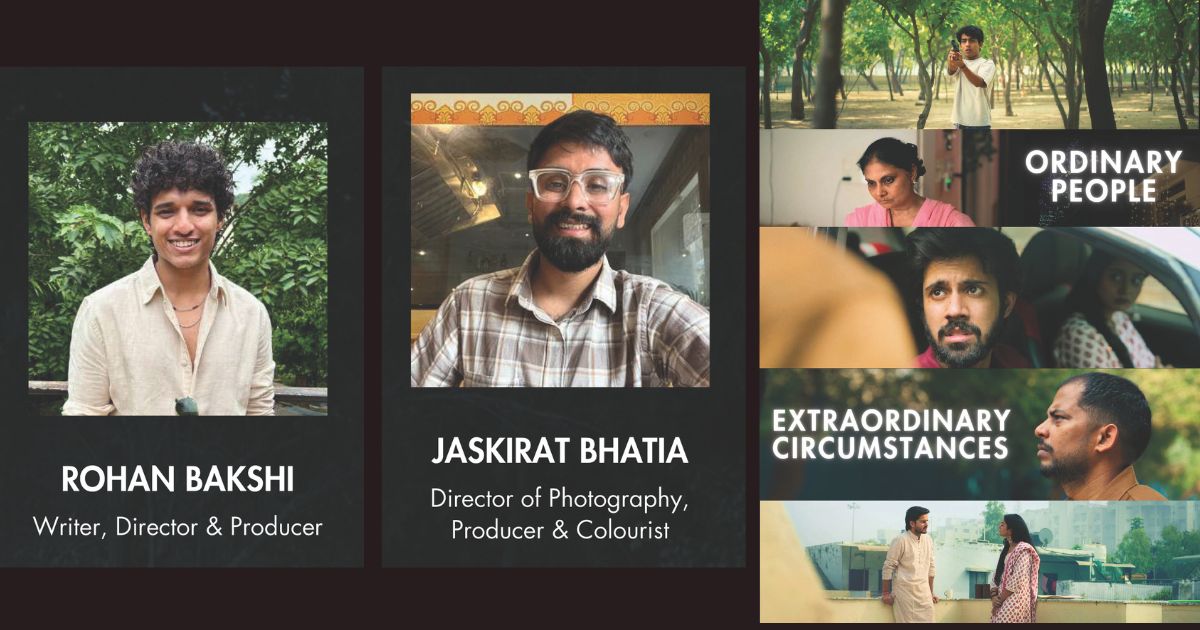
Bakshi arrived at filmmaking after studying commerce and attending a ten-day filmmaking course in Delhi. During the COVID lockdowns, he made several short films at home with his family and limited resources. Bhatia, meanwhile, moved away from engineering after recognising that his lifelong fascination with cameras was more than a hobby.
That independent spirit became essential when making Diwali Ke Shor Mein. Financed largely through crowdfunding from friends and family, the production relied heavily on goodwill. Neighbours offered locations, friends supplied food, and family members stayed until the early hours of the morning to appear as extras.
The filmmakers surrendered their own fees and completed principal photography in roughly 20 to 23 days, followed by several additional days of patchwork. Post-production took another seven to eight months.
The process was not without difficult decisions. Guided by mentor Paresh Kamdar, the team drastically shortened the final portion of the film after being told its ending was too drawn out. They did, however, trust their instincts on one critical choice: preserving the film’s open ending.
Bhatia represented the film at its Melbourne premiere after Bakshi’s visa application was rejected. Before the screening, his greatest fear was simple: that nobody would come. Instead, he found himself facing a strong and engaged audience.
“For the first half, I was watching the audience,” he recalled. “Then I decided to stop worrying and enjoy the film.”
For both filmmakers, the premiere represented more than international recognition. It affirmed a partnership built on persistence and a refusal to be discouraged by those who believed they were too young or inexperienced to make a feature film.
When the noise of Diwali Ke Shor Mein finally fades, Bakshi hopes audiences will remember its gripping story, recognisable characters and emotional truth. For him and Bhatia, the film will also remain something deeply personal: the first decisive step in what they hope will be long filmmaking careers.
Tonee Sethi
